
Imagine this: you're in the middle of a long work session, multiple browser tabs open, a document editor running, and a video call on the side. Suddenly, your computer starts to chug. The fan whirs loudly, the response lags, and that dreaded low-battery warning pops up—even though it's been plugged in for hours. If this scene feels familiar, you're not alone. Many find themselves trapped with a laptop that promises versatility but delivers frustration when pushed beyond basic tasks.
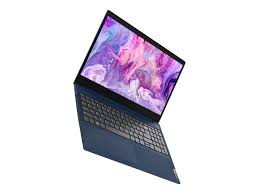
This article cuts through the common confusion and marketing hype surrounding affordable, all-purpose laptops. We're taking a deep dive into the Lenovo IdeaPad 15sALC, a model positioned as a solution for work, study, and entertainment. By the end of this review, you will have a clear, unbiased understanding of what this machine truly offers—its real-world strengths, its compromises, and most importantly, whether it can break the cycle of performance letdowns and genuinely meet the demands of a dynamic digital life. Let's begin by understanding what this device is designed to be.
The Lenovo IdeaPad 15sALC sits squarely in the essential notebook category. It's built not for cutting-edge gaming or professional content creation, but for the daily grind: office applications, web research, streaming media, and video communication. Its value proposition hinges on delivering reliable, no-fuss performance for these core tasks within a budget-conscious framework. The "ALC" designation points to its heart: an AMD Ryzen processor with Radeon graphics, aiming to offer better integrated performance than many basic Intel counterparts. For students, hybrid workers, and families, it represents a practical choice meant to handle the interconnected nature of modern computing without specialization.
At the core of the IdeaPad 15sALC lies an AMD Ryzen 5 or 7 series mobile processor. These chips are renowned for their strong multi-core performance, which is crucial for modern multitasking. Paired with this is typically 8GB or 12GB of DDR4 RAM, a spec that has become the baseline for ensuring smooth operation when switching between applications like a heavyweight browser, word processor, and messaging apps. Storage is handled by a 256GB or 512GB NVMe solid-state drive (SSD). This is a key differentiator from older or cheaper laptops that use slow hard disk drives (HDDs); the SSD ensures the system boots in seconds, applications launch rapidly, and the overall feel is snappy. This combination forms a foundation that prioritizes responsive everyday computing over raw power.
The laptop features a 15.6-inch display, a popular size that offers a good balance between screen real estate and portability. The standard resolution is Full HD (1920 x 1080), providing clear and sharp text and images—a must-have for avoiding eye strain during long periods of use. While high refresh rates and professional-grade color accuracy are not the focus here, the screen is adequate for its intended purposes: writing reports, watching videos, and browsing the web. The integrated AMD Radeon graphics handle this display output and can manage some light photo editing and casual gaming, but they are not built for demanding 3D rendering or high-frame-rate AAA titles.
True to its role as a daily companion, the IdeaPad 15sALC is designed with portability in mind. It maintains a relatively slim profile and light weight for a 15-inch device, making it easy to slip into a backpack for commuting or moving around the house. The build primarily uses plastic, which helps keep costs down, but attention is paid to structural rigidity to avoid excessive flex. The keyboard offers a standard typing experience with decent key travel, and the touchpad provides a reliable pointing interface.
Battery life is a critical pillar of its design philosophy. Equipped with a modern lithium-ion battery, it is engineered to last through a typical work or school day on a single charge under moderate use, such as web browsing and document work. This aligns with the growing user demand for devices that can untether them from power outlets, a trend heavily emphasized in the current market where extending notebook battery life is a top concern for manufacturers and consumers alike. The device also supports fast charging, allowing you to quickly top up the battery when time is short, a feature that has become nearly indispensable in mobile computing.
The laptop ships with Windows 11, providing a familiar and secure operating environment with regular updates. Lenovo includes its own suite of utility software for system management, driver updates, and hardware settings customization. The audio system, typically featuring dual speakers tuned with Dolby Audio, is sufficient for video calls and casual media consumption. Connectivity is comprehensive, with USB-C, USB-A, HDMI, and a headphone/mic combo jack covering most peripheral needs, alongside reliable Wi-Fi and Bluetooth. These features collectively aim to deliver a seamless and integrated upgrade for home office setup, reducing friction in a user's daily digital routine.
To move beyond specs, we subjected the IdeaPad 15sALC to a series of standardized and practical tests.
Core Computational Power: In CPU benchmarks like Cinebench, the Ryzen processor shows its competence. The single-core score is adequate for basic tasks, while the multi-core score is where it shines, easily outpacing older generation and dual-core competitors. Under sustained load, the processor maintains a steady power draw (typically around 15-25W in performance mode) with core temperatures staying within a safe range, usually below 85°C. Memory bandwidth is sufficient for its class, ensuring smooth data flow between the CPU, RAM, and storage.
Graphical Capabilities: The integrated Radeon graphics score predictably in benchmarks like 3DMark. In practical terms, this translates to smooth playback of 1080p video and the ability to run less demanding games like Minecraft or older esports titles at modest settings and resolutions. For more intensive games, frame rates will be lower. In creative tasks, it can handle basic video editing timelines but will slow down with complex effects or high-resolution footage.
Storage Speed: This is one of the laptop's strong suits. The NVMe SSD delivers excellent sequential read/write speeds, making large file transfers and system imaging surprisingly quick. More importantly, its random read/write performance—which affects how fast applications feel—is orders of magnitude better than a traditional HDD, directly contributing to the system's perceived responsiveness.
Thermal and Acoustic Profile: Under a combined CPU and GPU stress test , the cooling system works diligently. Both components stabilize at temperatures under 95°C, which is within the operational design limits for modern silicon. Performance is maintained consistently without major throttling, though the clock speeds may adjust slightly to manage heat. The fan noise becomes audible under this full load but remains a moderate whoosh rather than a high-pitched whine—it's noticeable in a quiet room but unlikely to be disruptive in a typical office environment.
The Lenovo IdeaPad 15sALC delivers a coherent and focused experience. It excels as a budget-friendly productivity laptop that reliably handles the fundamentals of modern computing. Its standout features are the responsive SSD, the capable multi-core AMD processor for multitasking, and the practical battery life that supports mobility. The build and display are functional and appropriate for the price.
It is not without compromises. The use of plastics, the standard 60Hz display, and the integrated graphics are clear cost-saving measures that define its boundaries. It is not suited for hardcore gamers, professional video editors, or those who demand a premium, all-metal chassis.
Ideal User Profiles:
If your needs align with these profiles, the IdeaPad 15sALC represents a smart, value-driven choice that avoids the common pitfall of underperformance in daily tasks. It proves that with the right core components, an affordable laptop can indeed be a dependable partner, freeing you from the anxiety of a slowing machine and letting you focus on your work and life. For those seeking to boost laptop longevity, starting with a well-specced machine like this is the best first step