
In an industry where technology becomes obsolete within months, the DJI Mavic 2 Pro stands as a remarkable exception. Years after its debut, this pioneering drone continues to spark passionate discussions among aerial photographers and filmmakers across the United Kingdom. What makes this particular model so enduring? The answer lies in a unique collaboration that resulted in something truly special—the world‘s first drone featuring an integrated Hasselblad camera. As we navigate through 2025, understanding the lasting value of this aerial platform requires diving deep into the science of its colour reproduction, its professional workflow advantages, and its continued relevance against a sea of newer competitors.
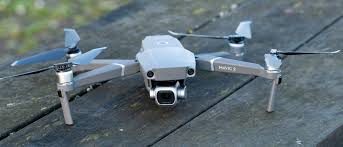
At the heart of the DJI Mavic 2 Pro lies its crowning achievement: the Hasselblad L1D-20c camera. This isn‘t merely a marketing badge; it represents a fundamental shift in how consumer drones render the world. The camera houses a 1-inch CMOS sensor with an active area four times larger than its predecessor, capturing 20-megapixel aerial shots with a level of detail that continues to impress . However, the true differentiator is the integration of Hasselblad Natural Colour Solution (HNCS) technology.
To understand why HNCS matters, one must compare it directly with the standard colour processing found in typical drone cameras. Ordinary colour science often aims for immediate visual pop—saturated skies, boosted contrast, and exaggerated greens that catch the eye but can feel artificial. This approach, while shareable straight out of camera, often sacrifices subtlety and can be difficult to correct consistently in post-production. HNCS takes a radically different philosophical approach. Rooted in Hasselblad‘s decades of medium-format expertise, this technology treats colour as data rather than decoration. It maps colours to a scientifically precise standard, ensuring that a red barn reads as true red, and skin tones retain their natural warmth without drifting into magenta or orange .
The practical difference becomes stark when shooting in challenging lighting conditions. During the golden hour along the Dorset coast or under the dappled light of the Lake District, the DJI Mavic 2 Pro captures the subtlest gradations with remarkable fidelity. Where standard modes might clip highlights or crush shadows, HNCS preserves a smooth tonal curve. This is further enhanced by the 10-bit Dlog-M color profile, which records over one billion colours—a staggering leap from the 16 million colours of 8-bit systems . For editors in Bristol or London post-houses, this means lifting shadows in a moody Scottish landscape won't introduce unsightly banding; the footage retains its integrity, grading much like footage from far more expensive cinema cameras.
Why do directors and cinematographers continue to reach for the DJI Mavic 2 Pro even as newer models hit the market? The answer extends beyond specifications sheets into the realm of practical filmmaking. In professional workflows, predictability is paramount. A director needs to know exactly how footage will behave in the grade, and this drone delivers consistency that some newer models, with their AI-driven processing, sometimes lack.
The variable aperture ranging from f/2.8 to f/11 provides an unprecedented level of creative control that professionals adore . Shooting at f/2.8 allows for dreamy, shallow depth-of-field shots with beautiful background separation when tracking a subject through an urban environment. Conversely, stopping down to f/8 or f/11 enables the classic "sunstar" effect during sunrise shoots over the Cotswolds, or allows cinematographers to achieve slower shutter speeds in bright conditions without immediately reaching for ND filters. This mechanical flexibility means the drone adapts to the director's vision, rather than forcing the vision to adapt to the drone's limitations.
Furthermore, the OcuSync 2.0 transmission system offers the reliability that film crews depend on . With the ability to transmit a stable 1080p feed over impressive distances, the DJI Mavic 2 Pro facilitates complex shots where the drone operator might be positioned far from the subject. The omnidirectional obstacle sensing provides a safety net that is particularly valued when shooting in dynamic environments like film sets, where crew, equipment, and talent are constantly moving . This 360-degree awareness, combined with the robust ActiveTrack 2.0, allows a single operator to execute tracking shots that would otherwise require a full camera car or crane team, making high-end production values accessible to independent filmmakers across the UK.
Evaluating the DJI Mavic 2 Pro in 2025 requires a pragmatic look at its position in the current market landscape. With newer drones offering longer battery life, obstacle sensing, and compact designs, one might assume this "classic" has been relegated to history. Yet, the evidence suggests otherwise. Recent user reviews and expert analyses consistently highlight its staying power, particularly in the professional sphere. A 2025 comparative analysis noted that the drone maintains an exceptional quality of image and stability, making it a predominant choice for experts despite newer arrivals .
The value proposition has shifted. Purchasing a DJI Mavic 2 Pro today, particularly in the refurbished or pre-owned market, offers access to professional-grade imaging at a fraction of the cost of a new flagship model. For photography enthusiasts in Manchester or videographers starting their journey in Edinburgh, this drone represents an entry point into the Hasselblad ecosystem without the associated medium-format price tag. The build quality remains remarkable; users report exceeding 200 flight hours with the chassis maintaining its integrity even in temperature extremes .
However, it is fair to acknowledge the considerations. The maximum flight time of 31 minutes, while still respectable, is now matched or slightly exceeded by newer entrants . Additionally, finding replacement parts or service for the intelligent flight battery and the integrated screen of the Smart Controller can sometimes require more effort, as noted by a user in Ireland who struggled to find battery replacement services locally . Yet, for the discerning photographer who prioritises colour accuracy and dynamic range over the very latest autonomous features, the trade-off remains overwhelmingly positive. The enhanced HDR photos and HyperLight low-light mode continue to produce images that rival and often surpass newer drones in the same class, particularly in how they handle noise and maintain clarity in dusk scenarios .
Even the most seasoned pilots encounter questions when flying the DJI Mavic 2 Pro. Addressing these common queries helps demystify the ownership experience and ensures users can maximise their investment. One frequent issue involves connection errors between the remote controller and a mobile device. For users of the DJI GO 4 app, a "Disconnected" warning can often be resolved by checking the physical cable connection, removing any phone case that might impede a full seat, and ensuring that the correct USB port at the bottom of the remote controller is being used while the left Micro USB cable is disconnected . Android users should also verify that "USB Debugging" is enabled in their developer options .
Another area of inquiry relates to photo capture intervals. Some users find their camera isn't snapping photos at expected rates during automated missions. This is often a simple matter of flight speed; the hardware requires approximately two seconds or more between captures, so slowing down the flight plan ensures the sensor has adequate time to write files, particularly when shooting in RAW and JPEG simultaneously . Keeping the DJI GO 4 app in the foreground and ensuring the microSD card is formatted within the drone can also resolve these hiccups .
Finally, potential buyers frequently ask about the drone's performance in the famously unpredictable British weather. The DJI Mavic 2 Pro handles wind speeds of up to 29–38 km/h effectively, and its 3-axis gimbal ensures footage remains silky smooth even when the drone is working to maintain position . The camera's performance in low light, a common condition during UK winters, is bolstered by the ability to open the aperture fully and leverage the sensor's improved ISO range up to 12800, making it a reliable companion for capturing the moody atmosphere of a misty morning or an early sunset .
The DJI Mavic 2 Pro transcends its status as a "previous-generation" product. It stands as a testament to a design philosophy that prioritised image integrity and creative control above all else. The partnership with Hasselblad yielded a colour science that continues to set a benchmark, while the inclusion of a mechanical variable aperture and a 10-bit Dlog-M color profile ensured its place in professional workflows for years to come. As we progress through 2025, this drone offers a compelling blend of proven reliability, exceptional image quality, and accessible pricing that few newer models can match. For the UK filmmaker, photographer, or enthusiast who values the art of the image over the allure of the new, the DJI Mavic 2 Pro remains not just a viable option, but a preferred one.